
Showing posts with label Gods and Goddesses. Show all posts
Showing posts with label Gods and Goddesses. Show all posts
Rama
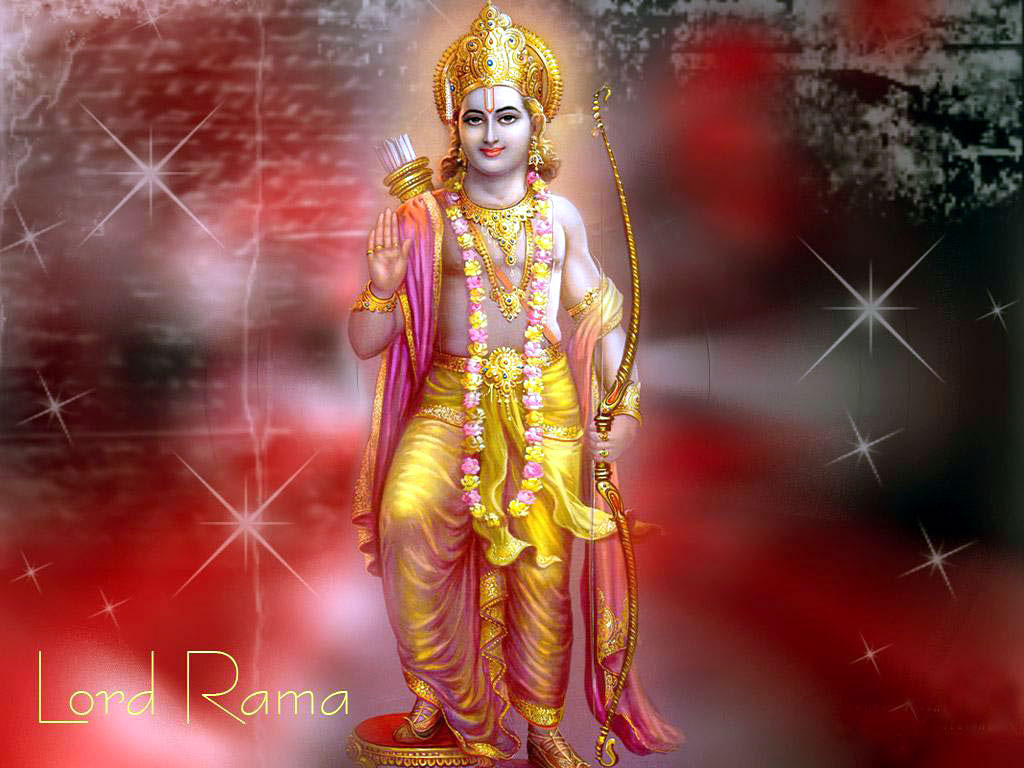
Rama, one of the most widely worshiped Hindu deities, the embodiment of chivalry and virtue. Although there are three Ramas mentioned in Indian tradition (Parashurama, Balarama, and Ramacandra), the name is specifically associated with Ramacandra, the seventh incarnation (avatara) of Lord Vishnu. It is possible that Rama was an actual historical figure, a tribal hero of ancient India who was later deified. His story is told briefly in the Mahabharata (“Great Epic of the Bharata Dynasty”) and at great length in the Ramayana (“Romance of Rama”).

References to Rama as an incarnation of Vishnu appear in the early centuries ce; there was, however, probably no special worship of him before the 11th century, and it was not until the 14th and 15th centuries that distinct sects appeared venerating him as the supreme god (notably that of the followers of the Brahman Ramananda). Rama’s popularity was increased greatly by the retelling of the Sanskrit epics in the vernaculars, such as Tulsidas’s celebrated Hindi version, the Ramcaritmanas (“Sacred Lake of the Acts of Rama”).
Rama and Krishna (also an incarnation of Vishnu) were the two most popular recipients of adoration from the bhakti (devotional) cults that swept the country during that time. Whereas Krishna is adored for his mischievous pranks and amorous dalliances, Rama is conceived as a model of reason, right action, and desirable virtues. Temples to Rama faced by shrines to his monkey devotee Hanuman are widespread throughout India. Rama’s name is a popular form of greeting among friends (“Ram! Ram!”), and Rama is the deity most invoked at death.
In sculpture, Rama is represented as a standing figure, holding an arrow in his right hand and a bow in his left. His image in a shrine or temple is almost invariably attended by figures of his wife, Sita, his favourite half-brother, Lakshmana, and his monkey devotee, Hanuman. In painting, he is depicted dark in colour (indicating his affinity with Lord Vishnu), with princely adornments and the kirita-makuta (tall conical cap) on his head indicating his royal status. Rama’s exploits were depicted with great sympathy by the Rajasthani and Pahari schools of painting in the 17th and 18th centuries.
.
Ganesha

Lord Ganesha - the Hindu deity in a human form but with the head of an elephant - represents the power of the Supreme Being that removes obstacles and ensures success in human endeavors. For this reason, Hindus worship Ganesha first before beginning any religious, spiritual or worldly activity. In Hindu mythology, Lord Ganesha is the first son of Lord Shiva and the Divine Mother Parvati. Their second son is Lord Subramanya and their daughter is Jyoti. As explained below, the portrayal of Lord Ganesha as the blend of human and animal parts symbolizes the ideals of perfection as conceived by Hindu sages and illustrates some philosophical concepts of profound spiritual significance.
- Elephant head, wide mouth, and large ears: the large head of an elephant symbolizes wisdom, understanding, and a discriminating intellect that one must possess to attain perfection in life. The wide mouth represents the natural human desire to enjoy life in the world. The large ears signify that a perfect person is the one who possesses a great capacity to listen to others and assimilate ideas.
- The trunk and two tusks with the left tusk broken: there is no known human instrument that has an operating range as wide as that of an elephant's trunk. It can uproot a tree and yet lift a needle off the ground. Likewise, the human mind must be strong enough to face the ups and downs of the external world and yet delicate enough to explore the subtle realms of the inner world. The two tusks denote the two aspects of the human personality, wisdom and emotion. The right tusk represents wisdom and the left tusk represents emotion. The broken left tusk conveys the idea that one must conquer emotions with wisdom to attain perfection.
- Elephant eyes: the elephant eyes are said to possess natural deceptiveness that allows them to perceive objects to be bigger than what they really are. Thus the elephant eyes symbolize the idea that even if an individual gets "bigger and bigger" in wealth and wisdom, he should perceive others to be bigger than himself; that is, surrender one's pride and attain humility.
- The four arms and various objects in the four hands: the four arms indicate that the Lord is omnipresent and omnipotent. The left side of the body symbolizes emotion and the right side symbolizes reason. An axe in the upper left hand and a lotus in the upper right hand signify that in order to attain spiritual perfection, one should cut worldly attachments and conquer emotions. This enables one to live in the world without being affected by earthly temptations, just as a lotus remains in water but is not affected by it. A tray of Laddus (a popular snack) near the Lord denotes that He bestows wealth and prosperity upon His devotees. The lower right hand is shown in a blessing pose, which signifies that Ganesha always blesses His devotees.
- A human body with a big belly: the human body possesses a human heart, which is a symbol of kindness and compassion toward all. Ganesha's body is usually portrayed wearing red and yellow clothes. Yellow symbolizes purity, peace and truthfulness. Red symbolizes the activity in the world. These are the qualities of a perfect person who perforrns all duties in the world, with purity, peace, and truthfulness. The big belly signifies that a perfect individual must have a large capacity to face all pleasant and unpleasant experiences of the world.
- A mouse sitting near the feet of Ganesha and gazing at the tray of Laddus: a mouse symbalizes the ego that can nibble all that is good and noble in a person. A mouse sitting near the feet of Ganesha indicates that a perfect person is one who has conquered his (or her) ego. A mouse gazing at the Laddus, but not consuming them, denotes that a purified or controlled ego can live in the world without being affected by the worldly temptations. The mouse is also the vehicle of Ganesha, signifying that one must control ego in order for wisdom to shine forth.
- Right foot dangling over the left foot: as stated above, the left side of the body symbolizes emotion and the right side symbolizes reason and knowledge. The right foot dangling over the left foot illustrates that in order to live a successful life one should utilize knowledge and reason to overcome emotions.
Vishnu

The four arms indicate Lord's omnipresence and omnipotence. The two front arms signify the lord's activity in the physical world and the two back arms signify His activity in the spiritual world. The right side of the body represents the creative activities of the mind and the intellect. The left side symbolizes the activities of the heart; that is, love, kindness, and compassion.
A conch in the upper left hand indicates that the Lord communicates with His devotees with love and understanding. When blowing His conch, He reminds his devotes to live in this world with kindness and compassion towards all living beings. A chakra in His upper right hand conveys the idea that the Lord uses this weapon to protect His devotees from evil. The mace denotes energy and a mace in the Lord's left lower hand signifies that He sustains the manifest world by the energy that He holds in Himself. His front right hand is depicted bestowing grace on His devotees.
The snake denotes the mind and the thousand heads of the snake signify innumerable desires and passions of an individual. Just as a snake destroys its victim by its venom, an uncontrolled mind destroys the world by the venom of its possessiveness. The Lord has controlled all desires, and this is symbolized by showing Him seated on the two coils of the snake. When a sincere devotee of the Lord controls his desires, the Lord fulfills the devotee's genuine desires and helps him on his path.
The blue sky in the background of the Lord suggests that He pervades the entire universe. The blue color symbolizes infinity. The blue body of the Lord signifies that He has infinite attributes. He is nameless, formless, and immeasurable. The color yellow is associated with earthly existence and the yellow clothes of the Lord signify that He incarnates Himself on this earth to uphold righteousness and destroy evil and unrighteousness.
A flower garland around the Lord's neck is a symbol of the devotee's adoration for the Lord. A gem decorating His neck signifies that the Lord fulfills all genuine desires of His devotees and provides for their needs. The crown is a symbol of the Lord's supreme power and authority. The two earrings signify the dual nature of creation, such as knowledge and ignorance, happiness and unhappiness, and pleasure and pain.
The worship of Lord Vishnu is very popular among Hindus, especially among the followers of the Vaishnava tradition (Vaishnavism). He is the second member of the Hindu Trinity, with Lord Brahma and Lord Shiva as the other two. Lord Vishnu is also known by other names, such as Vasudeva and Narayana. The following ten incarnations of Lord Vishnu are described in Hindu mythology and are popular among Hindus. These incarnations reveal the help rendered by God during various stages of human evolution. As shown below, the first two incarnations are in the animal form, the third one is half-human and half-animal, and the fourth and the subsequent ones are all in human form. These incarnations relate to human evolution from aquatic life to human life, and are consistent with the modern theory of evolution suggested by science:
- Matsya (fish)---saves Sage Manu from floods and recovers the Vedas from demons.
- Kurma (tortoise)---sustains the earth on his back.
- Varaha (boar)---brings the earth back from the bottom of the ocean where it was dragged down by a demon, known as Hiranyaksha; Varaha kills the demon.
- Narasimha (man-lion)---kills the demon King Hiranyakashipu, who was planning to kill his own son, a devotee of Lord Vishnu.
- Vamana (dwarf)---the first human incarnation of the Lord, kills the demon King Mahabhali, who had deprived the gods of their possessions.
- Parasurama (the warrior with an axe)---saves Brahmins from the tyranny of the arrogant Kshatriyas.
- Rama---kills Ravana, the demon king of Lanka.
- Sri Krishna---the most popular incarnation; Krishna's contributions throughout his life include the teachings of the Bhagavad Gita to Arjuna.
- Buddha---Hindus consider Buddha as an incarnation of Lord Vishnu and accept his teachings, but do not directly worship him.
- Kalkin (a man on a white horse)---this incarnation is yet to come and will mark the end of all evil in the world.
Shiva

Lord Shiva is the Lord of mercy and compassion. He protects devotees from evil forces such as lust, greed, and anger. He grants boons, bestows grace and awakens wisdom in His devotees. The symbolism discussed below includes major symbols that are common to all pictures and images of Shiva venerated by Hindus. Since the tasks of Lord Shiva are numerous, He cannot be symbolized in one form. For this reason the images of Shiva vary significantly in their symbolism.
- The unclad body covered with ashes: the unclad body symbolizes the transcendental aspect of the Lord. Since most things reduce to ashes when burned, ashes symbolize the physical universe. The ashes on the unclad body of the Lord signify that Shiva is the source of the entire universe which emanates from Him, but He transcends the physical phenomena and is not affected by it.
- Matted locks: Lord Shiva is the Master of yoga. The three matted locks on the head of the Lord convey the idea that integration of the physical, mental and spiritual energies is the ideal of yoga.
- Ganga: Ganga (river Ganges) is associated with Hindu mythology and is the most sacred river of Hindus. According to tradition, one who bathes in Ganga (revered as Mother Ganga) in accordance with traditional rites and ceremonies on religious occasions in combination with certain astrological events, is freed from sin and attains knowledge, purity and peace. Ganga, symbolically represented on the head of the Lord by a female (Mother Ganga) with a jet of water emanating from her mouth and falling on the ground, signifies that the Lord destroys sin, removes ignorance, and bestows knowledge, purity and peace on the devotees.
- The crescent moon: is shown on the side of the Lord's head as an ornament, and not as an integral part of His countenance. The waxing and waning phenomenon of the moon symbolizes the time cycle through which creation evolves from the beginning to the end. Since the Lord is the Eternal Reality, He is beyond time. Thus, the crescent moon is only one of His ornaments, and not an integral part of Him.
- Three eyes: Lord Shiva, also called Tryambaka Deva (literally, "three-eyed Lord"), is depicted as having three eyes: the sun is His right eye, the moon the left eye and fire the third eye. The two eyes on the right and left indicate His activity in the physical world. The third eye in the center of the forehead symbolizes spiritual knowledge and power, and is thus called the eye of wisdom or knowledge. Like fire, the powerful gaze of Shiva's third eye annihilates evil, and thus the evil-doers fear His third eye.
- Half-open eyes: when the Lord opens His eyes, a new cycle of creation emerges and when He closes them, the universe dissolves for creation of the next cycle. The half-open eyes convey the idea that creation is going through cyclic process, with no beginning and no end. Lord Shiva is the Master of Yoga, as He uses His yogic power to project the universe from Himself. The half-open eyes also symbolize His yogic posture.
- Kundalas (two ear rings): two Kundalas, Alakshya (meaning "which cannot be shown by any sign") and Niranjan (meaning "which cannot be seen by mortal eyes") in the ears of the Lord signify that He is beyond ordinary perception. Since the kundala in the left ear of the Lord is of the type used by women and the one in His right ear is of the type used by men, these Kundalas also symbolize the Shiva and Shakti (male and female) principle of creation.
- Snake around the neck: sages have used snakes to symbolize the yogic power of Lord Shiva with which He dissolves and recreates the universe. Like a yogi, a snake hoards nothing, carries nothing, builds nothing, lives on air alone for a long time, and lives in mountains and forests. The venom of a snake, therefore, symbolizes the yogic power.
- A snake (Vasuki Naga): is shown curled three times around the neck of the Lord and is looking towards His right side. The three coils of the snake symbolize the past, present and future - time in cycles. The Lord wearing the curled snake like an ornament signifies that creation proceeds in cycles and is time dependent, but the Lord Himself transcends time. The right side of the body symbolizes the human activities based upon knowledge, reason and logic. The snake looking towards the right side of the Lord signifies that the Lord's eternal laws of reason and justice preserve natural order in the universe.
- Rudraksha necklace: Rudra is another name of Shiva. Rudra also means "strict or uncompromising" and aksha means "eye." Rudraksha necklace worn by the Lord illustrates that He uses His cosmic laws firmly - without compromise - to maintain law and order in the universe. The necklace has 108 beads which symbolize the elements used in the creation of the world.
- Varda Mudra: the Lord's right hand is shown in a boon- bestowing and blessing pose. As stated earlier, Lord Shiva annihilates evil, grants boons, bestows grace, destroys ignorance, and awakens wisdom in His devotees.
- Trident (Trisula): a three-pronged trident shown adjacent to the Lord symbolizes His three fundamental powers (shakti) of will (iccha), action (kriya) and knowledge (jnana). The trident also symbolizes the Lord's power to destroy evil and ignorance.
- Damaru (drum): a small drum with two sides separated from each other by a thin neck-like structure symbolizes the two utterly dissimilar states of existence, unmanifest and manifest. When a damaru is vibrated, it produces dissimilar sounds which are fused together by resonance to create one sound. The sound thus produced symbolizes Nada, the cosmic sound of AUM, which can be heard during deep meditation. According to Hindu scriptures, Nada is the source of creation.
- Kamandalu: a water pot (Kamandalu) made from a dry pumpkin contains nectar and is shown on the ground next to Shiva. The process of making Kamandalu has deep spiritual significance. A ripe pumpkin is plucked from a plant, its fruit is removed and the shell is cleaned for containing the nectar. In the same way, an individual must break away from attachment to the physical world and clean his inner self of egoistic desires in order to experience the bliss of the Self, symbolized by the nectar in the Kamandalu.
- Nandi: the bull is associated with Shiva and is said to be His vehicle. The bull symbolizes both power and ignorance. Lord Shiva's use of the bull as a vehicle conveys the idea that He removes ignorance and bestows power of wisdom on His devotees. The bull is called Vrisha in Sanskrit. Vrisha also means dharma (righteousness). Thus a bull shown next to Shiva also indicates that He is the etemal companion of righteousness.
- Tiger skin: a tiger skin symbolizes potential energy. Lord Shiva, sitting on or wearing a tiger skin, illustrates the idea that He is the source of the creative energy that remains in potential form during the dissolution state of the universe. Of His own Divine Will, the Lord activates the potential form of the creative energy to project the universe in endless cycles.
- Cremation ground: Shiva sitting in the cremation ground signifies that He is the controller of death in the physical world. Since birth and death are cyclic, controlling one implies controlling the other. Thus, Lord Shiva is revered as the ultimate controller of birth and death in the phenomenal world.
Krishna

Who Is Krishna?
Krishna is the Supreme Personality of Godhead. The question is then why is he called Krishna? The answer is because word Krishna means “he who attracts everyone” and also because Shree Brahma the creator of the physical universe called him Krishna when he prayed to his creator for guidance in creating this physical creation. Krishna is also known as Parbrahma Krishna, Aksharaitita Krishna, Purna Purusottam, Supreme Father, Paramatama, Paramtattav, and Raj Shyma. There is no other being above and beyond Krishna. Krishna the Supreme Personality of Godhead appeared on Earth as the 8th avatar in Sanatan Dharma (Hinduism). His appearance occurred in Indian 5,000 years ago and he remained on earth for 125 years playing like a human being while establishing righteousness and dharma. What makes the appearance of Krishna the Supreme Personality of Godhead so unique is that while all the other avatars were of Shree Vishnu, Shree Brahmaji, or Shree Sankar in Sanatan Dharma (Hinduism), the 8th avatar was of Supreme Personality of Godhead Krishna himself. Please note that Parbrahma and Brahma do not take birth through mother womb, they just appear. There are different types of avatars that can happen—Avesh, Ansha, Anshansh, Maryada, and Purna. Avesh avatar is entering of any of the avatar into a form of certain human for certain time and certain purpose. The word Ansha means expansion of vibhuty as continual fractional power as a divine personality or form. Vibhuty is a different energy of Brahma combining to create a swaroop (form). Anshansh is an expansion of Ansha avatar. Maryada avatar is usually an expansion of Brahma. Purna avatar is the Supreme Personality of Godhead himself in his total opulence and power. All other avatars have some limitation in the opulence and power, but not the Purna avatar.
What Is Tartam/Keval Gyan?
Taratam means knowledge that delivers you from ignorance to knowledge, physical bondage to spiritual freedom. Understanding Krishna’s creation in detail and knowing Shree Krishna’s play in Bramandakash, Paramakash, Sadakasha, and Chidakasha in detail is called Taratam knowledge. It is also known as Keval Gyan. Understanding the three form of Shree Krishna the Supreme Personality of Godhead is also vital to understanding Taratam knowledge. The three form of Shree Krishna are: Kshar Purush, Akshar Purush, Aksharatit Purush. Aksharatit Purush is Shree Krishna himself in his total opulence and power. When Shree Krishna expanded himself to create the creation he first created a form of Akshar Purush, and gave the Akshar Purush the responsibility and powers to create the both the physical universe and spiritual universe. Akshar Purush expands to Kshar Purush to maintain the physical universe. Kshar Purush is also called Shree Narayan.
What Is Essence of Bhagavad Gita?
Bhagavad Gita is a universal message from Lord Shree Krishna to mankind, and it has the power to have a profound effect on person's life that truly understands it message. It explains in the simplest manner the profound secretes of Sanatan Dharma (Hinduism) to a sincere person yearning to find the answer to his or her relationship with this material world and to God, Shree Krishna the Supreme Personality of Godhead. It explains the truth of this material world, individual soul's action and bondages to it in due course of time, and the role of the Shree Krishna (God) to both. Bhagavad Gita clearly and coherently explains the nature of consciousness, the self, and the material and spiritual world. It is the nectar of Indian spiritual wisdom, and answer to questions posed by philosophers of the world. True spiritual knowledge will free you from the bondage of material needs, and lead you to peace and happiness found in one self. False spiritual knowledge will lead you to bondage, misery, and away from your self. If one does not know what one stands for, the chances are that person will fall for (accept) ever thing. Similarly if one does not know himself, one can never claim to know Lord of his universe. Bhagavad Gita has the power to introduce one self to self, and one self to the God, Shree Krishna the Supreme Personality of Godhead. When choosing to read Bhagavad Gita it is important to make sure the translation one is reading is from a bonafide spiritual master that has learned and practiced in Science of Krishna consciousness. As a man can not server two masters, without one day having to choose one over the other; in the path of spiritual progress man not server himself if he seek to server God. One has to choose, and in life that is all we can do is choose our path. May your path be steady, clear, peacefully, and full of service to God. What ever name you may give God, we call him Lord Shree Krishna.
Subscribe to:
Posts (Atom)